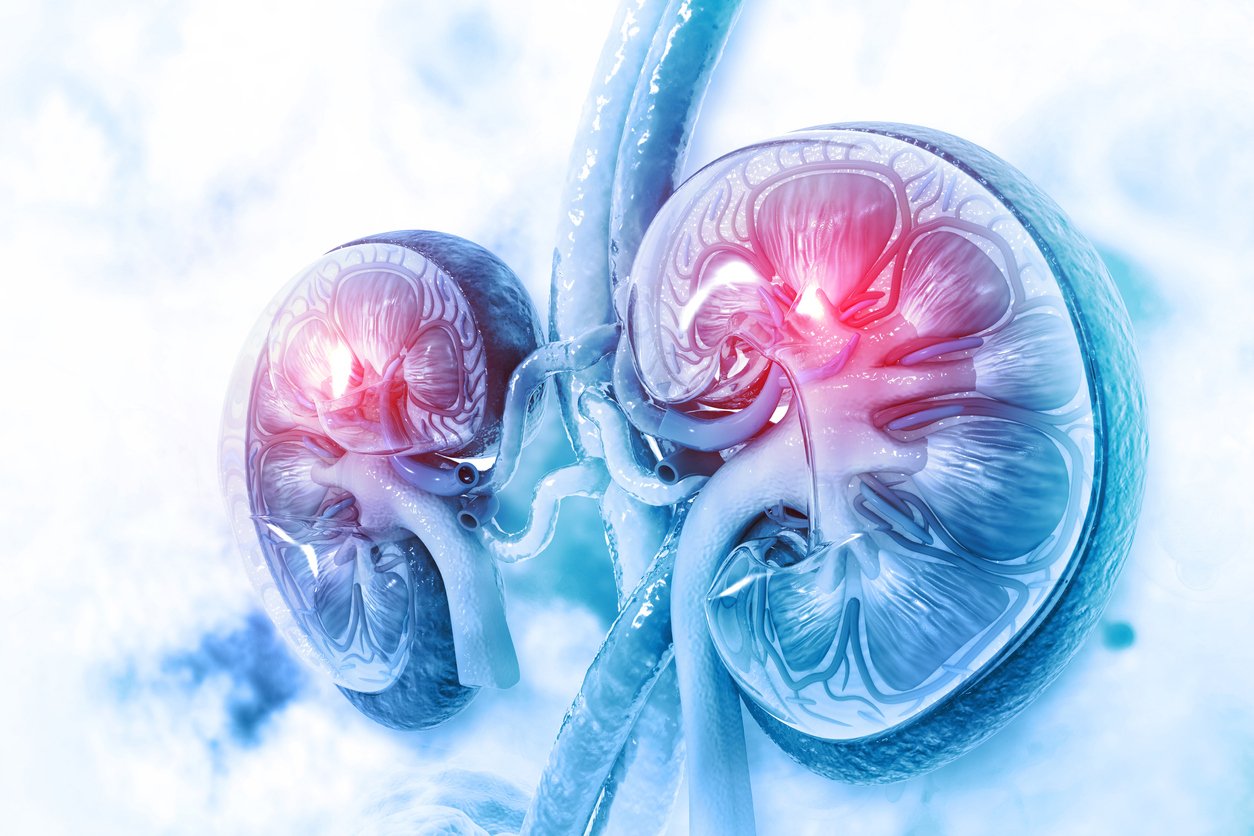
Complement 3 glomerulopathy (C3G) is a rare, genetically inherited kidney disease that causes the kidneys to malfunction, eventually resulting in kidney failure. It is estimated to impact 2-3 out of 1,000,000 people, and there is currently no medicine on the market to treat the condition.
What is C3G?
The complement system is a collection of proteins in the blood that help the immune system fight bacteria and viruses. If the complement system becomes overactive, normal complement proteins (such as C3) can be broken down. The breakdown of these products can then become lodged in the kidneys, causing irritations that injure the glomeruli (filtering units) and interfere with their ability to filter the blood.
“Complement 3” refers to a blood protein that plays a vital role in our body’s immunity, while “glomerulopathy” refers to damage to the glomeruli in the kidney. When the body’s complement system becomes overactive, C3 complement proteins are broken down and trapped in the glomeruli, where they can then cause damage.
Because C3G is a disease that was not understood until recently, the naming convention is also fairly new. Before 2013, many C3G patients would have been given a diagnosis of “membranoproliferative glomerulonephritis (MPGN)” or “mesangioproliferative glomerulonephritis.” For more information on C3G, this American Kidney Fund video is available.
How C3G kidney disease is diagnosed
A C3G diagnosis requires a kidney biopsy to be confirmed. Because it is such a rare disease, doctors will typically run a series of tests, such as a urinalysis, a blood work panel, and an ultrasound, to rule out other causes beforehand. If these still indicate that C3G is a possibility, a biopsy will be performed to look for dense deposits of the complement protein C3 in the kidney tissue. The biopsy of a C3G patient will show breakdown products of C3, and other proteins will be absent from the glomeruli.
For more information, the American Kidney Fund has a helpful video explainer about how C3G is diagnosed.
Symptoms of C3G
Some of the common symptoms of C3G can include:
- Proteinuria (high levels of protein in the urine)
- Hematuria (blood in the urine)
- Hypoalbuminemia (low levels of protein in the blood)
- Swelling of the hands, feet, and ankles
- Generalized fatigue
- Urine that is dark and/or foamy
- High blood pressure
The severity and overall progression of C3G depend on many factors, and there are treatments designed to ease symptoms for those diagnosed. However, because there is currently no known treatment for C3G, the disease typically worsens with time, eventually leading to kidney failure.
C3G vs. Stage 3 Kidney Disease
While C3G is a type of kidney disease, it differs from Stage 3 chronic kidney disease (CKD) in a few key ways. Stage 3 CKD does involve kidney damage, protein in the urine, and some noticeable symptoms, but there are a variety of things that can cause Stage 3 CKD.
In the case of C3G, the damage to the kidneys, protein in the urine, and any other symptoms are specifically caused by Complement 3 blood proteins being broken down and trapped in the glomeruli. This is something that can only be confirmed with a kidney biopsy, as doctors must check for C3 proteins in the kidney’s glomeruli under a microscope.
What is a kidney biopsy?
A kidney biopsy is a procedure to take one or multiple samples of the kidney to examine under a microscope, which makes it possible to analyze kidney tissue in great detail. A biopsy can either be taken percutaneously (through the skin) via a needle or taken directly from the kidney during a surgical procedure.
For both types of biopsies, the sample will be sent to a pathologist where a special stain will be added to make C3 proteins visible. If the pathologist sees a build-up of C3 proteins, they can then determine if the sample is consistent with C3G patients.
What resources are available for C3G patients?
While there is no medication on the market designed specifically for C3G, patients can work with their team of medical professionals to manage symptoms and delay the progression of kidney damage through a variety of methods. To learn more about C3G, including how it is diagnosed and what treatment options are available, the links below may be helpful:
- American Kidney Fund video: How Doctors Diagnose C3G
- American Kidney Fund video: What are IC-MPGN and C3G?
- National Kidney Foundation: C3G Patient Resources
- Antidote blog: What is C3G?
- Antidote blog: C3G kidney disease: How is it diagnosed and how is it treated?
Additionally, participating in a clinical trial can be a potentially helpful option for C3G treatments. To learn more about current trial opportunities, answer a few questions today.